
Two completions.
Different outcomes.
Explore proper and adverse drilling and completion using the finished PACE borehole diagrams. Switch views to compare the source from the surface downward.
Proper completion: centered casing, planned screens, annular isolation, and a sealed wellhead.
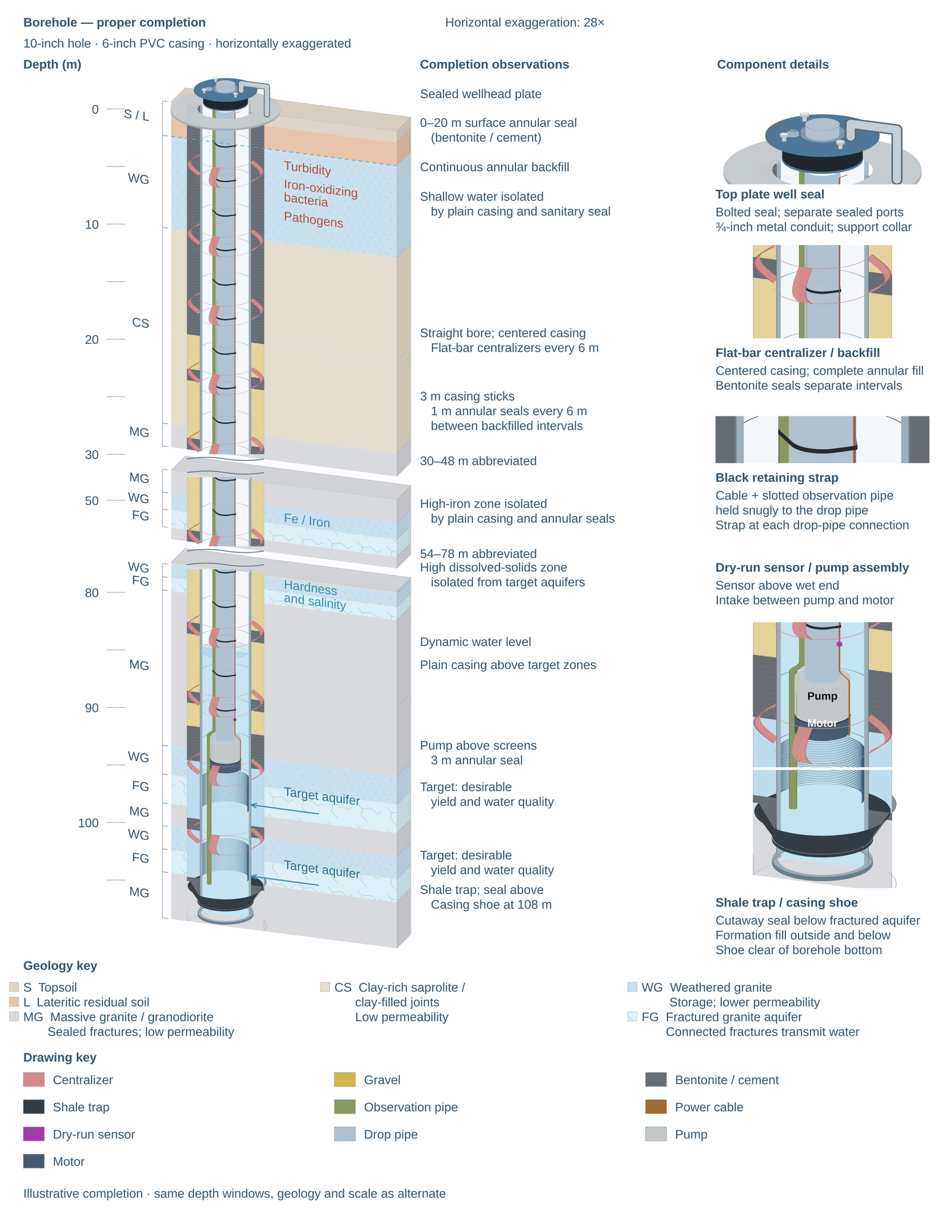
Conceptual comparison with exaggerated width and abbreviated depth intervals. The adverse example illustrates failure mechanisms, rather than describing every borehole in any region.
Compare the details.
| Element | Proper example | Adverse example |
|---|---|---|
| Wellhead | Top plate well seal, protected cable route, and surface apron. | Loose plate, open penetrations, and exposed cable. |
| Casing & trajectory | Casing extends through the target intervals, with centralizers and a casing shoe. | Wandering borehole and eccentric casing; the casing hangs up on a ledge or dogleg. |
| Screen placement | Selected screens correspond to the target aquifers. | Alternating screened and plain casing admits water from unwanted zones; deeper targets remain unreached. |
| Annular materials | Surface sanitary seal, intermediate seals, and selected filter pack isolate intervals. | Shallow seal and bridged gravel leave unfilled annular space below. |
| Water quality | Completion aims to isolate unwanted contributing zones. | Shallow turbidity, iron-oxidizing bacteria, and pathogens, plus iron, hardness, and salinity from other zones, illustrate potential mixing. |
| Downhole condition | Pump, dry-run sensor, and water level are shown in the completed source. | Drawdown, cascading inflow, and iron oxide floc fill illustrate an adverse operating condition. |
Know which zones contribute.
Log drilling progress, water strikes, driller’s yield, conductivity, and water-quality samples by depth. Use those records, borehole geometry, and formation conditions to plan casing, screens, filter pack, and seals. Verify the completed source with development, pumping tests, and water-quality testing.
Explore all PACE focus areas ↗